Why the Sun Through a Car Window Changes What You Should Wear

Quick Answer: Car glass blocks most UVB but lets a great deal of UVA and near-infrared through, so the side of your body facing the window heats up and gets sun exposure while the rest of you sits in cabin air conditioning. That temperature split across a single body is why one arm feels roasted and your other shoulder feels cold on the same drive. Dress for two climates at once - a light long sleeve you can push up, a breathable base, and something for the shaded side. The fix is asymmetry, not more or fewer layers.
Everyone blames the air conditioning.
The glass is doing at least half of it.
What is actually happening through the window?
Two separate things - heat and ultraviolet - and they behave differently.
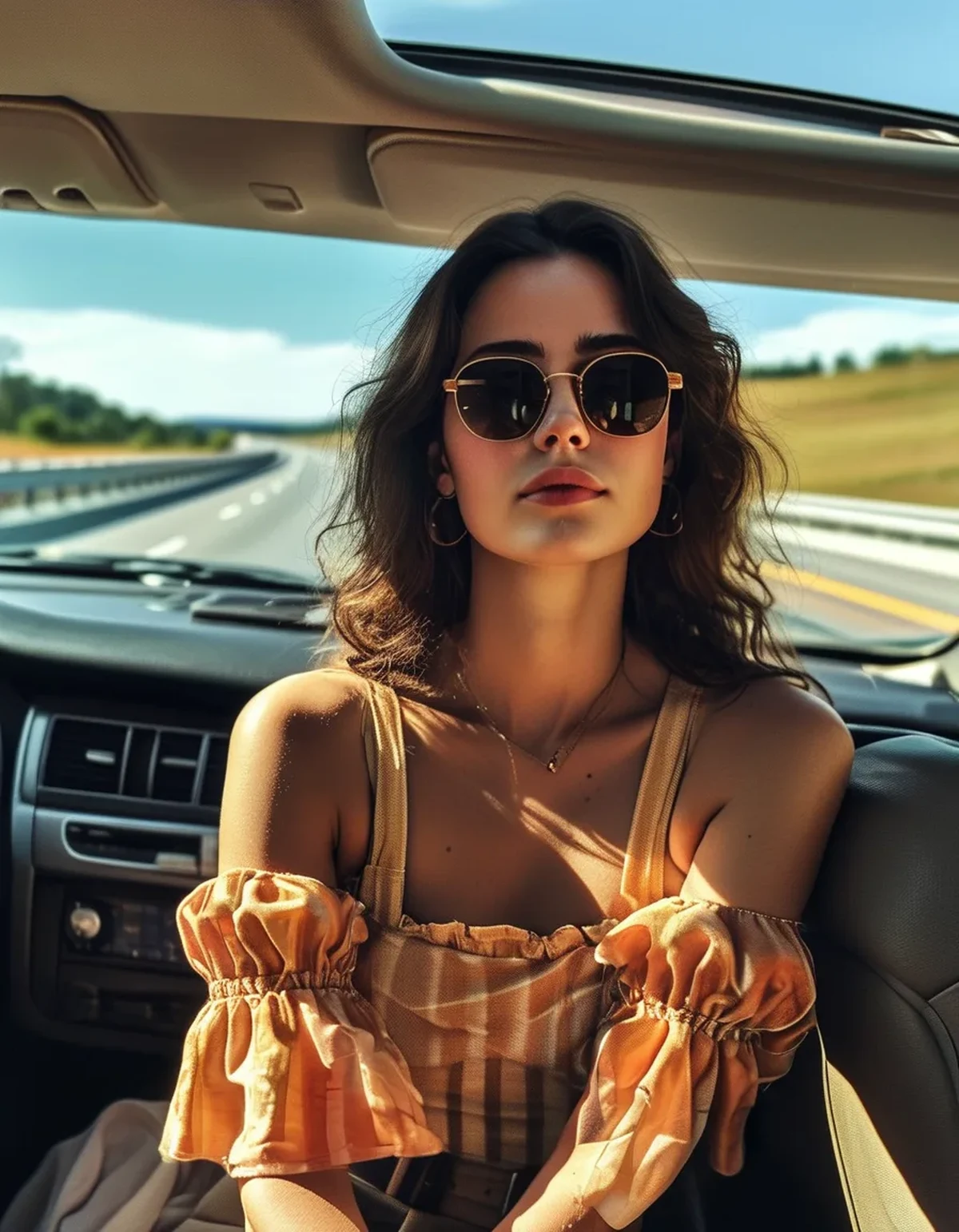
Standard side windows are tempered glass, and tempered glass blocks very little UVA. Windshields are laminated and block far more, which is why the driver’s left arm in a left-hand-drive country is the classic sun exposure spot and the windshield side is not. Dermatologists have documented asymmetric sun damage patterns in people who drive for a living for decades.
Heat comes through separately as near-infrared. The glass transmits a large share of solar radiant heat, so the skin facing the window absorbs energy directly even while the cabin air around it is being cooled to 70 degrees. Your skin is warm and the air is cold at the same moment.
Air conditioning cannot fix this because it cools air, not surfaces. The vent blows cooled air past you; radiant heat lands on you regardless of air temperature. This is the same reason standing in the sun on a cold day feels warm.
And the effect is entirely one-sided. One arm, one thigh, one side of the neck receives it. The other side of your body is sitting in moving cold air with nothing landing on it. A single garment cannot be right for both.
The result feels like the car is broken. It is not - you are experiencing a genuine 10 to 15 degree difference across your own body, which no thermostat setting resolves.
Which fabrics actually help through glass?
Weave density matters far more than thickness, and colour matters more than people expect.
Tightly woven fabric blocks more UV than loose weave, at the same weight. Hold a fabric up to a light - if you can see light through the weave, UV is getting through it too. A thin, densely woven cotton poplin outperforms a thicker, loosely knitted jersey.
Stretched fabric loses protection. Knits pulled taut over the skin open up their gaps, which is why a tight legging or fitted sleeve is less protective than the same fabric worn with ease. On a long drive, the leg pressed against the seat is stretched.
Darker and more saturated colours absorb more UV. They also absorb more heat, which is the trade-off. A mid-tone works better than either extreme for a sunny drive - white lets more UV through, black bakes.
Damp fabric protects less than dry. Sweat-soaked cotton transmits noticeably more UV, which matters on a hot summer drive with a warm window side.
Synthetics generally outperform natural fibres for this. Polyester in particular absorbs UV well, which is why sun shirts are usually synthetic. Late summer into early autumn, a light long-sleeve synthetic top is close to ideal - it handles the window side and dries fast if the car gets warm.
And rated sun fabric exists if you drive a lot. A UPF 50 rating means roughly 1/50th of UV passes through - a real difference for someone doing six hours in the same seat.
How do you dress for two temperatures on one body?
Build the outfit so you can change one side without changing the whole thing.
Start with a breathable base you would be comfortable in at the coolest cabin setting. A short sleeve tee or a light tank in a fabric that does not hold sweat is the foundation. This is the layer that handles the shaded, air-conditioned side.
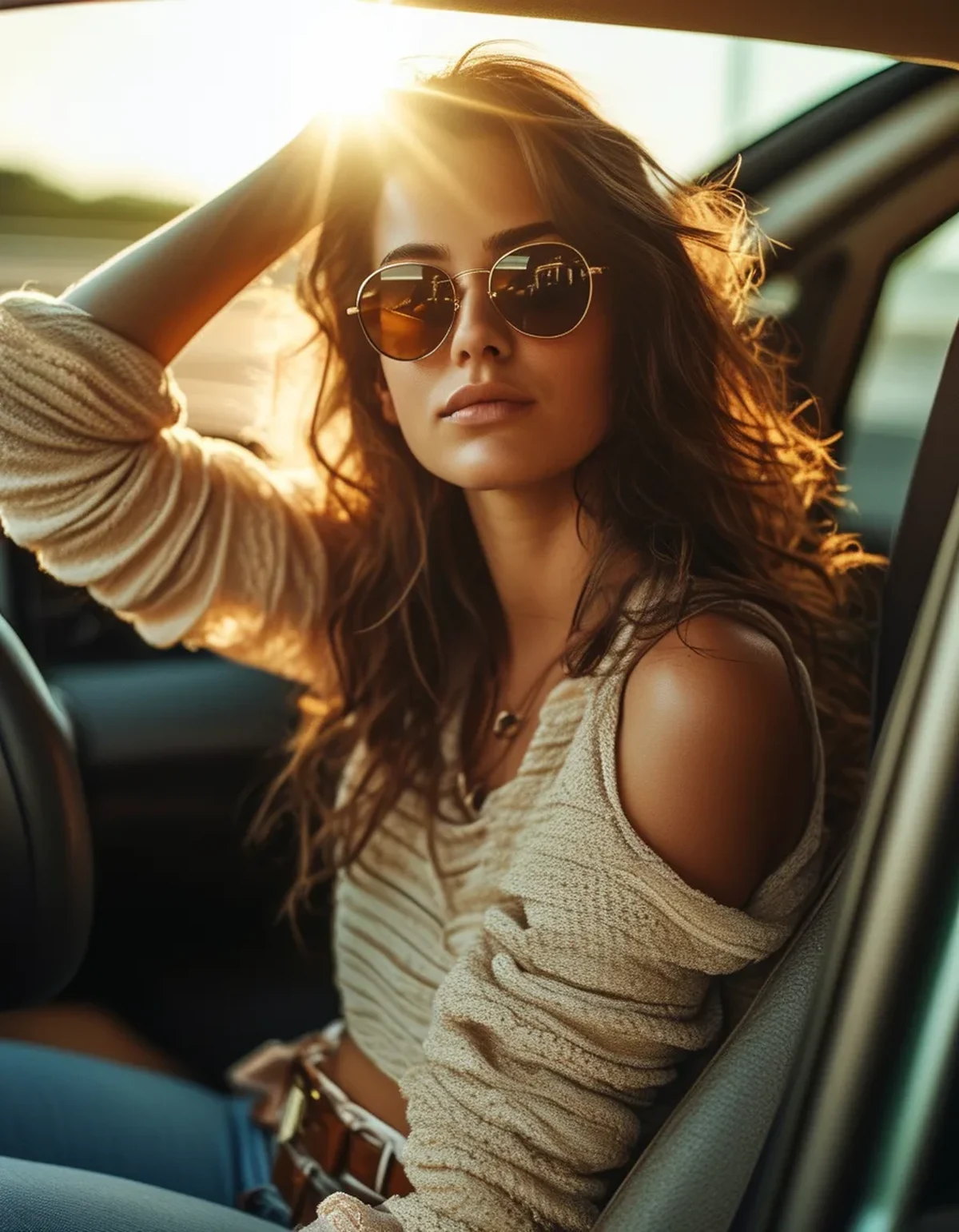
Add a light long-sleeve top you can push up, drape, or drop off one shoulder. A loose button-front shirt is the most flexible garment for this because you can wear it fully, half off, or draped over one arm depending on which side the sun is on. That single item solves most of the problem.
Cover the legs on the window side or accept the exposure. Long, loose trousers or a light throw across the lap protects the thigh that gets sun for hours. A blanket or scarf on the seat beside you is genuinely useful here and costs nothing.
Keep something warm for the shaded side. A cardigan or light jacket over the shoulder away from the window balances an outfit that is otherwise being cooked on one side and chilled on the other.
Shoes matter more than expected in a long drive. Feet swell over hours of sitting, so a shoe that fits perfectly at hour one binds at hour five. Slip-ons or something with adjustable closure beat laced shoes.
And plan for the direction of travel. A morning drive east and an afternoon drive west put the sun on different sides of the car - if you know the route, you know which arm needs covering.
5 Mistakes Everyone Makes on a Long Sunny Drive
1. Assuming the windshield protects the side windows too. It does not - laminated windshields block most UVA, tempered side glass does not. The difference is dramatic and most people have never heard it.
2. Dressing for the destination instead of the car. You will spend more hours in the car than you will spend arriving in it. An outfit that photographs well at the overlook and binds across the seatbelt for five hours is the wrong trade.
3. Skipping sunscreen because you are indoors. A car is not indoors for UVA purposes. The left arm and left side of the face of long-distance drivers show measurably more photoaging - this is documented, not theoretical. Sunscreen on the exposed side is the single highest-return thing on this list.
4. Wearing one thick layer instead of two thin ones. A single heavy top cannot be adjusted for a body that is hot on one side and cold on the other. Two light layers can.
5. Choosing a fabric that shows sweat. The seat-contact areas - lower back, backs of thighs - get warm and damp on any drive over two hours, regardless of the cabin temperature. A fabric and colour that hides that is a practical choice, not a vain one.
And the one nobody mentions: the seatbelt. The belt runs diagonally across the exact area that gets window sun and presses fabric against skin for hours. A textured or seamed top under that belt line is what leaves marks.
What changes as summer turns to fall?
The sun angle drops, which makes the window problem worse, not better.
A lower sun angle means more light enters the side windows directly rather than passing over the roof. Late September afternoon sun comes in sideways at eye level in a way that August noon sun does not. The window side of your body gets more direct exposure in autumn than in high summer.
Meanwhile the outside air is cooler, so the air conditioning runs less or the heat comes on. Now you have a warm window side and a genuinely cold shaded side - the split gets wider, not narrower.
Layer weight goes up, which reduces flexibility. A heavy autumn jumper cannot be pushed up an arm the way a light shirt can. Two mid-weight layers beat one heavy one for exactly this reason.
And morning and evening drives change character. Early autumn mornings can start at 45 degrees and reach 75 by mid-afternoon - a 30 degree swing inside a single drive. The outfit that was right leaving the driveway is wrong by lunch.
The practical autumn kit: a breathable base, a light long-sleeve shirt, a warmer layer that lives on the back seat, and a scarf. The scarf is the most versatile item - neck warmth on the cold side, sun cover on the window side, and a lap layer when parked.
Keep sunglasses regardless of temperature. The low autumn sun is genuinely harder to drive into than summer sun, and squinting for two hours is its own kind of exhausting.
FAQ: Road Trip Sun and Outfit Questions, Answered
Does window tint solve this?
Partly. Most factory tint reduces visible light more than UVA, and dedicated UV-blocking film blocks the vast majority of UVA. Heat-rejecting films also cut the near-infrared that causes the warm-arm effect. Tint laws vary by state, so check before adding film.
Should I wear sunscreen for a drive?
Yes, on the side facing the window - arm, hand, side of the neck and face. The asymmetric photoaging pattern in professional drivers is well documented. Reapply on drives over two hours, since the exposure is continuous.
What is the single most useful garment for a long drive?
A loose, light, long-sleeve button-front shirt. It covers the sun side, opens for the cool side, pushes up when you get warm, and does not crease into your back against the seat. Nothing else adapts as many ways for as little bulk.
TL;DR:
- Side windows block UVB but let plenty of UVA and radiant heat through - your window-side arm is genuinely hotter and genuinely exposed.
- Air conditioning cools air, not surfaces, so it cannot cancel radiant heat landing on your skin.
- Dense weave, mid-tone colour, and synthetics protect better than thick loose knits.
- Build the outfit in two light layers so you can adjust one side without changing everything.
- Autumn is worse, not better - the lower sun angle sends more light straight through the side glass.
Put sunscreen on the window-side arm before your next drive over an hour. It is the cheapest thing on this list and the one that shows up in twenty years.
Keep Reading
This article is for general informational and styling purposes only. Fit, sizing, and product availability may vary.